These records are found in the online catalog of The Mariners’ Museum and Park in Newport News, Virginia. Uncurated search results are presented to give researchers and interested readers an idea of whether the museum’s archives contain information about this vessel and whether it may be worthwhile to visit the museum’s catalog search page for further investigation. Uncurated results may be inaccurate or incomplete.
Mariners Museum online catalog search, July 12, 2026. Search phrase: "Wheatley". Catalog returned 16 records; this selection table includes 16 records fetched through catalog result pages.
Use these buttons to send uncurated search results to your own app or text document for further research. First, check the box for any row, or click "Select All" then uncheck any rows. Then click "Show Selections". You can then copy your selections from the text box and past them into your app.
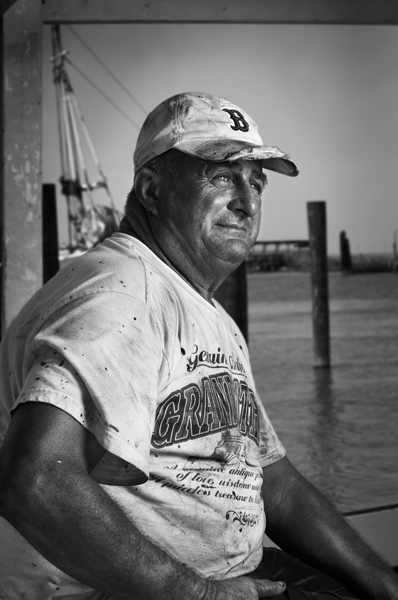
Freddie Wheatley didn’t really want to stop working for an interview and would have preferred to get cleaned up before a portrait was taken. His engine had blown up and he had quite a bit of engine oil on his shirt, face and arms. Freddie’s father, grandfather, great-grandfather, and son-in-law were or are watermen. Freddie Wheatley is 55 years old, a Red Sox fan, and is well known in the brotherhood of watermen all over the Bay.
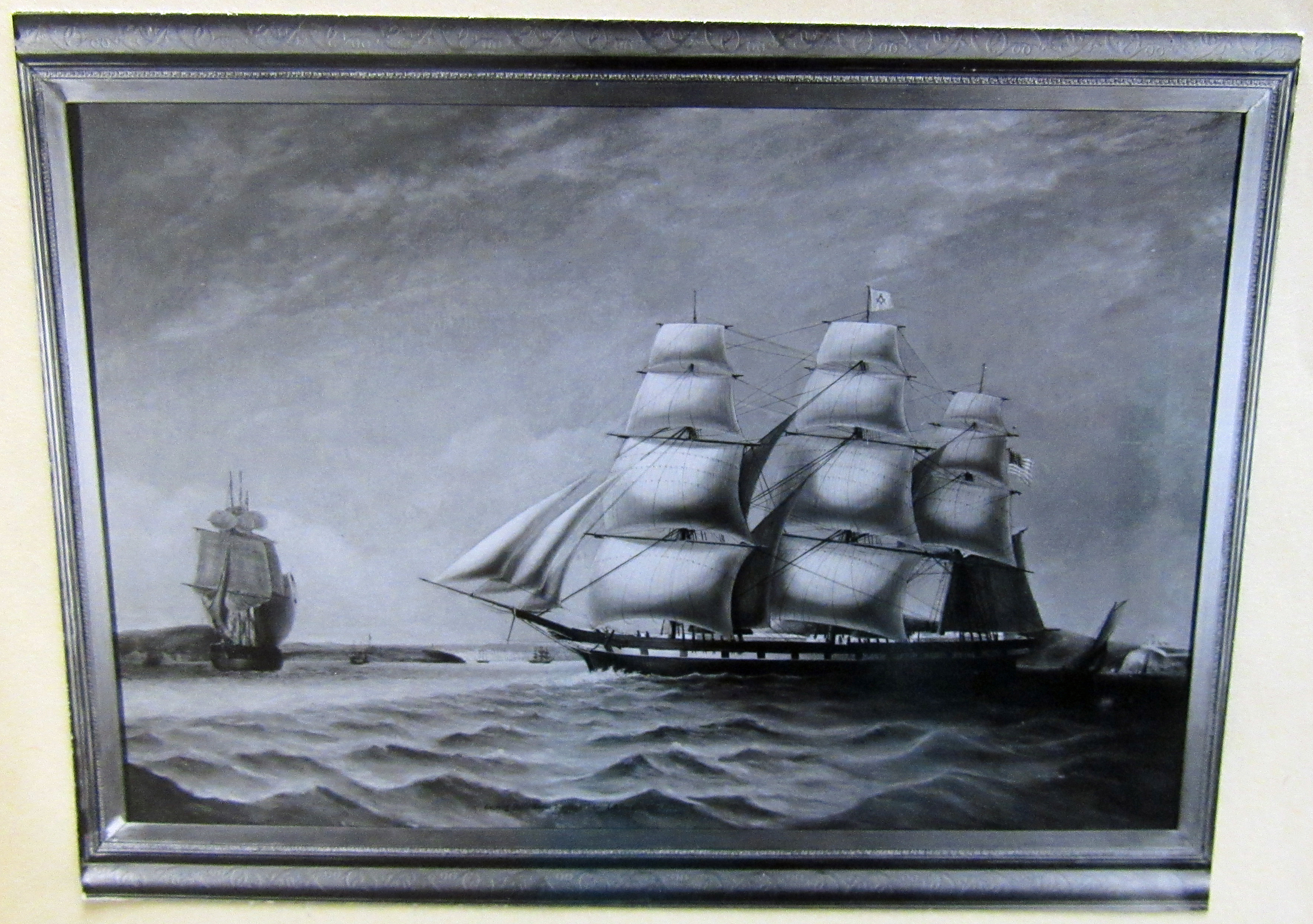
NOTES: Sam Davidson, 9/22/95, burden 899 tons O.B. Small master 1865 ""George M.W. Atkinson 1865"" [George Mounsey Wheatley Atkinson] crossing Cork entrance in background with Roche Point to right- masonic flag personal to master- might be traceable if Boston Lodge extant. VESSEL INFORMATION - VESSEL NAME: GUIDING STAR VESSEL BUILT: 1864 VESSEL TYPE: AMERICAN WOODEN PADDLE STEAMER SHIP BUILDER: ROOSEVELT JOYCE & WATERBURY BUILDER LOCATION: NEW YORK, NEW YORK SHIP'S OWNER: NEW YORK MAIL STEAMSHIP COMPANY VESSEL DIMENSIONS: 313' length x 41' beam x 31' depth of hold, 2400 tonnage VESSEL HISTORY: Fitted with a verticle beam engine that had been in the steamer MISSISSIPPI on the Great Lakes. Arrived in New York on Friday, July 28, 1865 under Captain Berry from New Orleans in the record time of 5 days, 11 hours and 30 minutes. Chartered by the New York and Havre Steamship Company in March 1867 and placed on the Havre route. Purchased in March 1868 by W.H. Webb and placed on the "No. American Steamship Company's" service an opposition line to California. Broken up at Cold Spring in the fall of 1874.
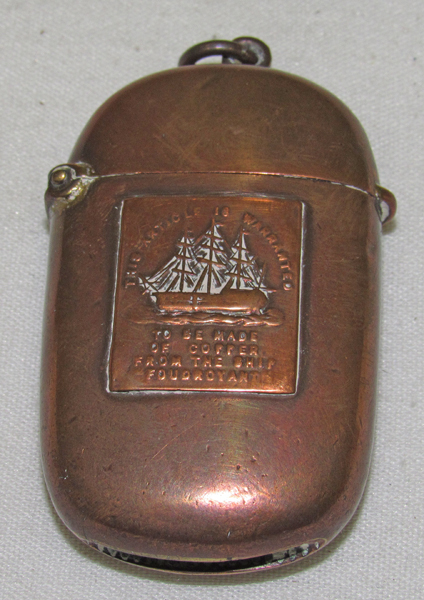
NOTES: [From Oldcopper.org] The second HMS Foudroyant was launched in Plymouth in 1798, as a second rate line of battle ship with 80 guns (variable throughout her career). Measurements were 2,062 tons, 184ft x 51ft. Usual armament included 30x 32pdrs, 32x 24pdrs, 14x 12pdrs and 12 carronades. She was Nelson's flagship from June 1799 to June 1800, then being described a 3rd rate battleship and used during the campaign to recapture Naples. In 1862, she was converted to a training ship and served the Plymouth gunnery school, HMS Cambridge. In 1892, she was sold for breaking up to a German firm for one thousand pounds. Because of her association with Nelson, there was a public outcry including a Punch cartoon by Linley Sambourne. She was sold, then purchased by George Wheatley Cobb for twenty thousand pounds (his own expense) with a view for display at various ports and a sail training ship. She was wrecked at Blackpool in a gale on 16th June 1897. The salvage terms were that the company involved received two thousand pounds only if they re-floated her. If they failed, they could buy the wreck for ten pounds. The ship was unsalvageable and the company recovered some of their expenses by making souvenirs from the timber and copper and selling them. Hundreds of different varieties were sold, including medallions, coins, items of furniture and walking sticks. Vesta cases, vesta boxes, or pocket match safes or matchsafes were small portable boxes made in a great variety of forms with snapshut covers to contain vestas (short matches) and keep them dry. The name of the Roman goddess Vesta, was used by an early maker of strike-anywhere matches. Early matches were unreliable and prone to ignite from rubbing on one another or spontaneously so most people carried a match safe to house their matches. Each match safe had a ribbed or rough surface, usually on the bottom, for lighting the matches. VESSEL INFORMATION - VESSEL NAME: H.M.S. FOUDRYANT VESSEL TYPE: 80-gun second rate warship BUILDER LOCATION: PLYMOUTH, MASSACHUSETTS SHIP'S OWNERS: ROYAL NAVY (1798) VESSEL DIMENSIONS: 2,055 tons, 184' x 151'6" x 50'6" x 22'6"
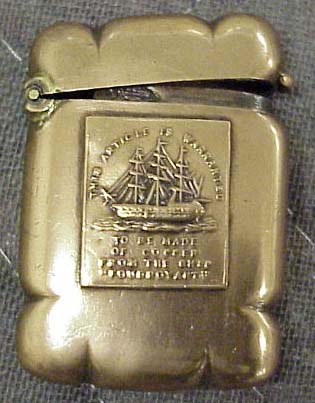
SHORT DESCRIPTION: Copper matchsafe with raised plate on front with three masted ship and inscription. Hinged lid, and serrated striking edge at bottom. NOTES: [From Oldcopper.org] The second HMS Foudroyant was launched in Plymouth in 1798, as a second rate line of battle ship with 80 guns (variable throughout her career). Measurements were 2,062 tons, 184ft x 51ft. Usual armament included 30x 32pdrs, 32x 24pdrs, 14x 12pdrs and 12 carronades. She was Nelson's flagship from June 1799 to June 1800, then being described a 3rd rate battleship and used during the campaign to recapture Naples. In 1862, she was converted to a training ship and served the Plymouth gunnery school, HMS Cambridge. In 1892, she was sold for breaking up to a German firm for one thousand pounds. Because of her association with Nelson, there was a public outcry including a Punch cartoon by Linley Sambourne. She was sold, then purchased by George Wheatley Cobb for twenty thousand pounds (his own expense) with a view for display at various ports and a sail training ship. She was wrecked at Blackpool in a gale on 16th June 1897. The salvage terms were that the company involved received two thousand pounds only if they re-floated her. If they failed, they could buy the wreck for ten pounds. The ship was unsalvageable and the company recovered some of their expenses by making souvenirs from the timber and copper and selling them. Hundreds of different varieties were sold, including medallions, coins, items of furniture and walking sticks. Vesta cases, vesta boxes, or pocket match safes or matchsafes were small portable boxes made in a great variety of forms with snapshut covers to contain vestas (short matches) and keep them dry. The name of the Roman goddess Vesta, was used by an early maker of strike-anywhere matches. Early matches were unreliable and prone to ignite from rubbing on one another or spontaneously so most people carried a match safe to house their matches. Each match safe had a ribbed or rough surface, usually on the bottom, for lighting the matches. VESSEL INFORMATION - VESSEL NAME: H.M.S. FOUDRYANT VESSEL TYPE: 80-gun second rate warship VESSEL DATE: Laid down Mary 1789, Launched March 31, 1798 BUILDER LOCATION: PLYMOUTH DOCK (DEVONPORT) SHIP'S OWNERS: ROYAL NAVY (1798) VESSEL DIMENSIONS: 2,055 tons, 184' x 151'6" x 50'6" x 22'6" FATE: Sold 1890. Foundered on Blackpool Sands June 16, 1897.
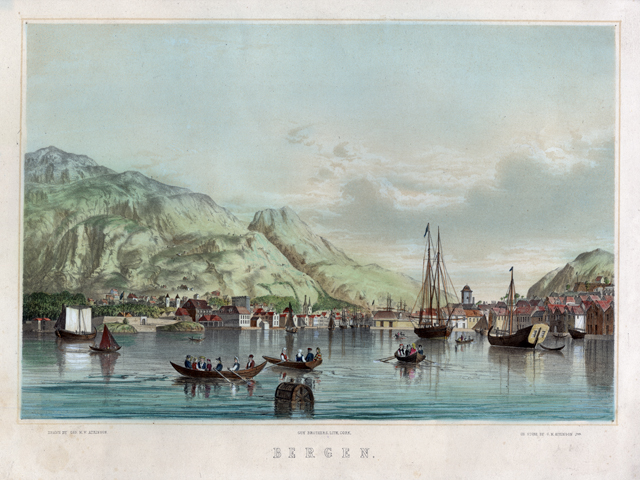
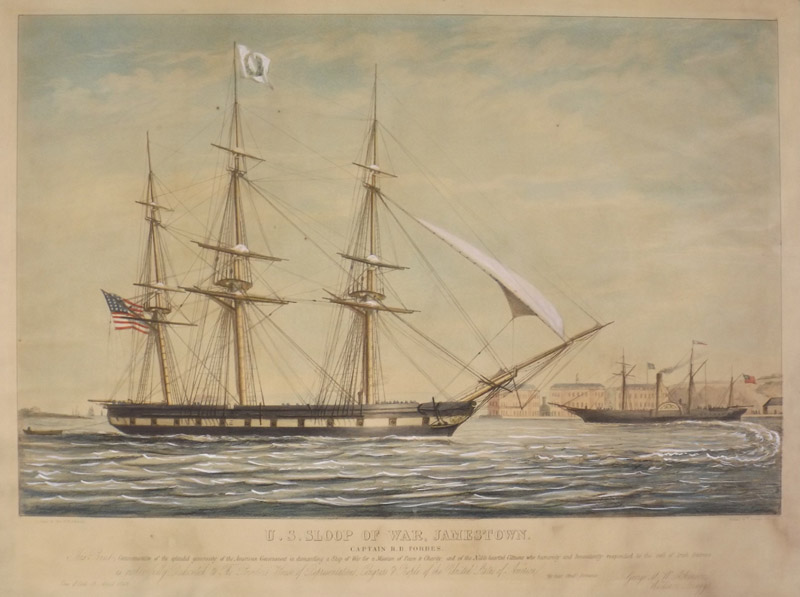
SHORT DESCRIPTION: Hand colored lithograph, highlighted with watercolor or gouache depticting the 'U.S. Sloop of war, Jamestown'. Engraved by George M. W. Atkinson and printed by William Scraggs in Cork. NOTES: This lithograph is from the estate of Francis Patrick Garvan (1875-1937). Most of whose art and silver collection went to Yale University and the Colonial Williamsburg Foundation. [This is taken from "Jamestown" account, summarized and prepared for Forbes House Museum by John Colhoun, Erik Ronnberg's research, and Catherine Shannon's account (via Forbes House). From the fitzhenrylaneonline.org] The first ship named "Jamestown" was a sloop of war launched in 1844 at the Gosport Navy Yard, Virginia, the first American warship to be given that name. Classed as a “ship sloop”, a.k.a. “sloop of war” the “Jamestown” was built at Norfolk Navy Yard in 1843-44 to a design by Naval Constructor Foster Rhodes. Her 1844 battery consisted of four 8-inch shell guns and eighteen 32-pound muzzle-loading cannon. Her registry (not overall) dimensions were: length 157’ 6” between perpendiculars (rudder post to stem rabbet at main deck), beam 35’ , and depth in hold of 16’ 2” for a register (not actual) tonnage of 985 tons. Leaving Hampton Roads on June 25, 1845, she was the flagship of Commodore Charles W. Skinner, then in command of U.S. naval vessels operating off the western coast of Africa to suppress the slave trade. The sloop returned to the U.S. and ported in Boston on August 6, 1846. While the "Jamestown" was moored in Boston, the Cunard Line steamer "Hibernia" arrived with news of the second consecutive year that blight had ruined the potato crop in Ireland and the resulting Irish famine, and Bostonians responded immmediately. Mayor Josiah Quincy hosted a meeting attended by about four thousand people at Fanueil Hall on February 18, 1847. A New England Relief committee was formed, which included Robert Bennet and John Murray Forbes. R. B. Forbes began to lobby for the "Jamestown" which was lying idle in Charlestown Navy Yard. On March 3, by U.S. Congressional resolution, R. B. Forbes was authorized to take command of the "Jamestown," while Captain George Coleman McKay was authorized to command USS "Macedonian," then at New York Navy Yard. $151,000 and tons of food were donated and loaded onto the vessel by the Boston Labourers Society (mostly Irish), free of charge. R.B. Forbes supervised this and the refitting of the ship, including removal of all but two of its cannon."When the "Jamestown" left Boston at 8:30 a.m. on March 28, 1847, she carried 800 tons of provisions worth $40,038. The cargo comprised various grains, such as oats, rye, flour, indian corn, and beans but also 400 barrels of port, 100 tierces of ham and some mutton, as well as some dried local apples. There were also 28 barrels of clothing and 800 empty sacks to be used for distributing the barreled train in smaller units." R. B. Forbes completed the Atlantic crossing in a record 17 days. Forbes wrote a book about it, and had Lane draw a lithograph as frontispiece. The “Jamestown” proved to be an excellent sailer, but slightly top-heavy unless carefully ballasted and trimmed. Her passage from Boston to Ireland was very fast, due to hard driving. After the Civil War, the “Jamestown” was placed in ordinary, forgotten by the public, and never returned to active service. Her last years were spent as a marine hospital in New York Harbor, still afloat in 1932. ADDITIONAL INFORMATION: See Robert B. Forbes, The Voyage of the Jamestown on Her Errand of Mercy, (1847)

 MS0568-55
 1947.0589.000001
 QO 922
 qb46
 Full-size image
 lp3748